Getting started
WELE is a platform for practicing English listening through dictation: you listen to podcasts and type out exactly what you hear. Why take this harder route instead of just listening and reading the transcript? Because when you have to write every word down, your ear can't "skim" — every sound has to be recognized decisively, and the places where you type something wrong are clear evidence of what your ear is still missing. This page takes you down the shortest path from zero to your first exercise.
Sign up & sign in
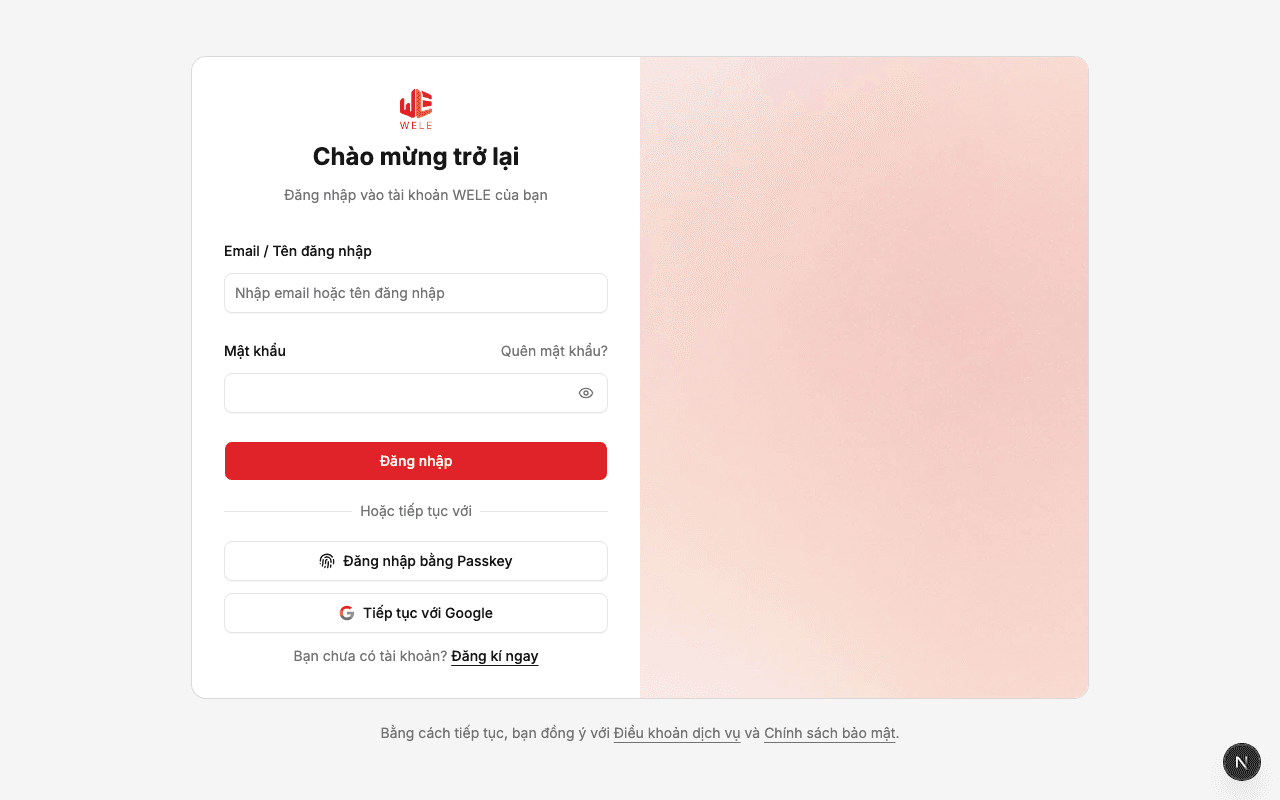
You can create an account with email, or sign in quickly with Google or a Passkey. A Passkey uses your device's fingerprint or face recognition instead of a password, so it's both fast and hard to leak. Once you're signed in, WELE takes you straight to Home, with new listening exercises and the challenges currently running.
Right at the start, WELE asks you to rate your own level (A1 to C2). This isn't a formality: your answer becomes the starting point for a hidden ability value (called θ — see Progress), so your very first recommended exercise is already close to your level instead of picked at random.
Choose something to listen to
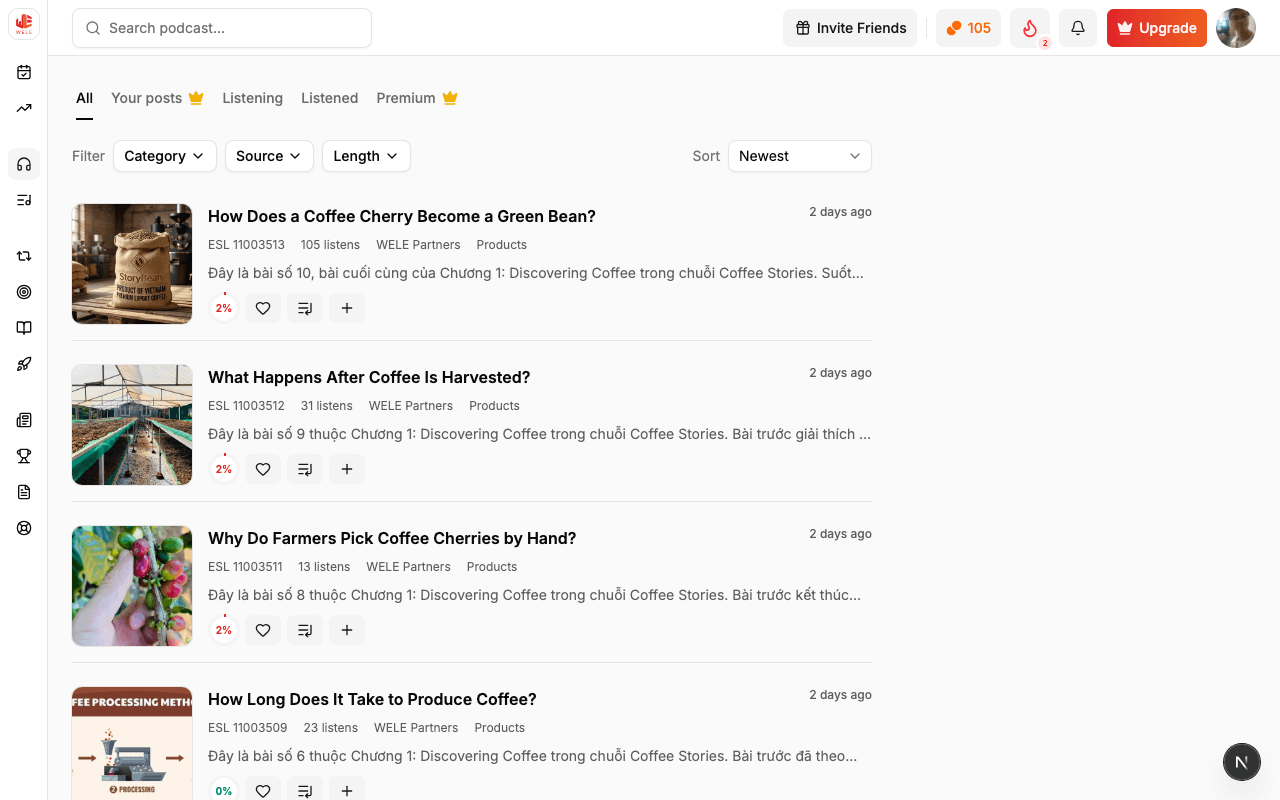
Go to Library → Podcasts to see every exercise. Each one shows a source label (for example BBC 6 Minutes English), a play count, difficulty and enjoyment scores rated by learners, plus an introduction in your interface language and a vocabulary table (word · IPA transcription · meaning).
You can filter by Category, Source and Length, and sort by newest. If you're not sure what to pick, let WELE suggest something on the Today page (see Today) — it chooses for you based on data instead of making you guess which exercise is the right level.
Starting an exercise: with or without hints
The exercise detail page has two buttons: "Listen with hint" and "Listen without hint". Hint mode reveals how many letters each word has (the underlined blanks) — a form of scaffolding: knowing a word has 4 letters narrows down your guesses and keeps you from freezing up, which suits beginners. Without hints, that scaffolding is gone; it's harder and closer to real exams (IELTS/TOEIC), because in a test you never know a word's length in advance.
Why does that matter? Dictation helps most when it's just hard enough that you have to push, but not so hard that you give up. Hints lower the barrier to entry; once you're comfortable, switch to no hints to keep the exercise challenging.
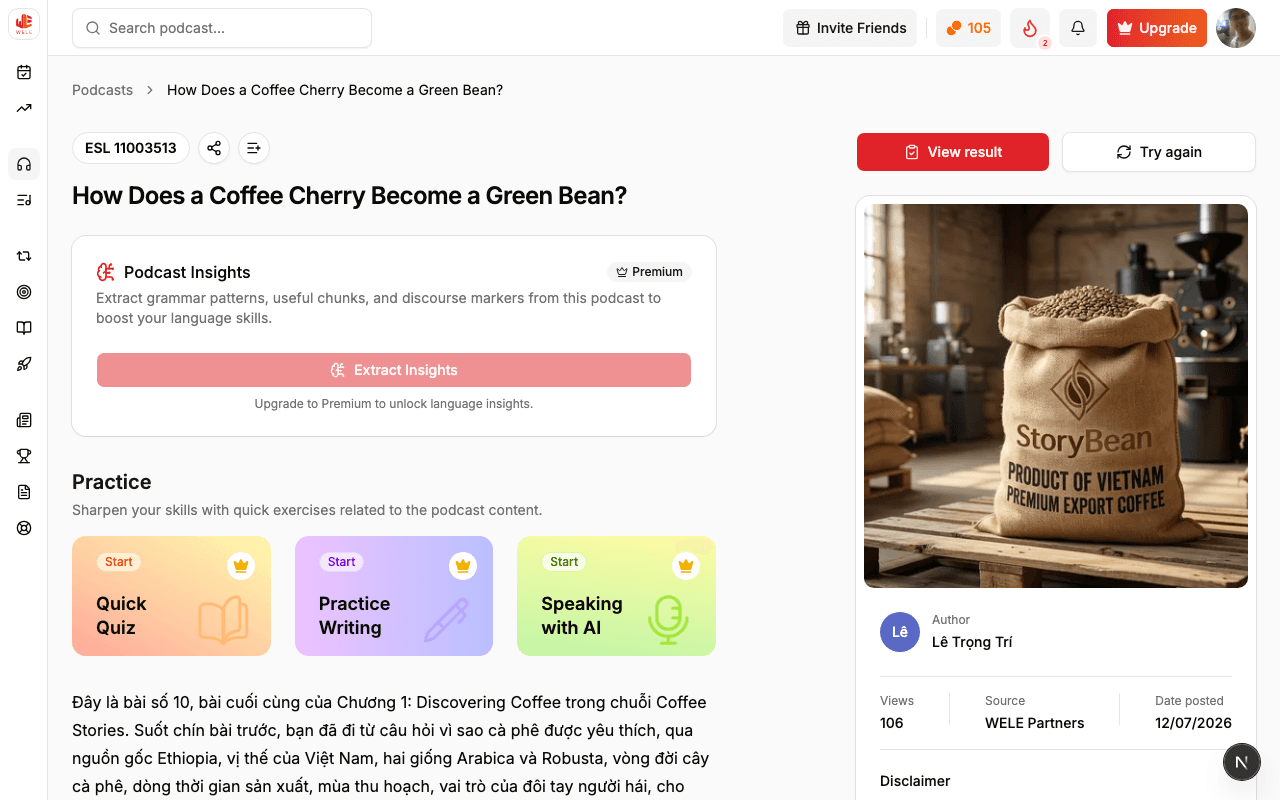
The detail page also has "Podcast Insights" — Patterns, Chunks and Discourse markers drawn from the episode, with examples. Skimming this before you listen tells your ear "what to listen for", so you catch the meaning faster.
Did you know
- The exercise recommended on Today is always chosen around your level so you land at about ~80% accuracy — the sweet spot of "desirable difficulty": enough mistakes to learn from, enough right answers to stay motivated.
- The Difficulty and Enjoyment scores you see are averages rated by the learner community itself — not assigned by a machine — so they reflect the real experience of the learners who came before you.
- The level you report at sign-up is loaded as your starting θ, so the system doesn't "start from zero" — it's already aiming at the range that suits you from the very first exercise.