We Enjoy Learning English
English Dictation Practice

Hear a sentence, type exactly what you heard, then check it against the transcript. It shows you precisely where your ear still falls short — something passive listening and multiple-choice quizzes never tell you.
Free, no card required. More than 30,000 people have practiced with WELE.
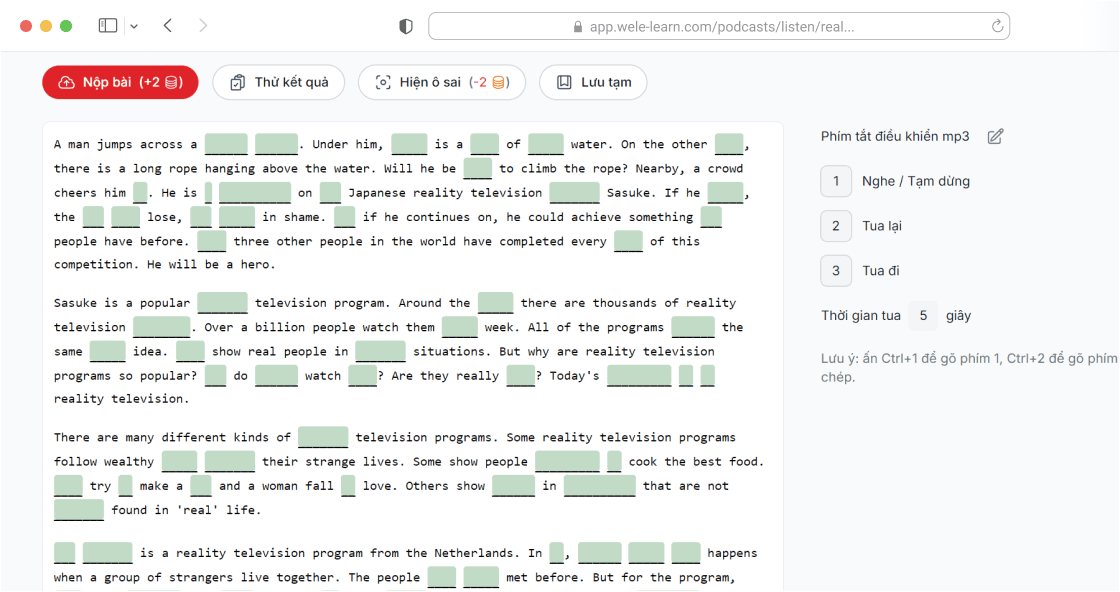
What is English dictation?
Dictation means turning speech into writing. You listen to a short clip, type it out word for word, then compare it with the original. What makes it different is that there are no answers to pick from: either you heard the word, or you didn't.
Passive listening
You get the gist, nod along, and assume you understood. Nothing ever checks that feeling.
Dictation
The gaps only show once you have to write it out: half the function words get swallowed, the -s and -ed endings go completely unheard, and the linked sounds come out blank.
You typed
The researcher ask participant to keep a diary for six week.
Actual
The researchers asked participants to keep a diary for six weeks.
Four final sounds slipped away. Passive listening would never catch it — you only see it once you write it down.
How dictation works on WELE
- 1
Listen all the way through first, without typing
The first pass is just for the topic and the speaker's voice. However much you catch is fine — the point is to get used to the rhythm, not to grab every word.
- 2
Type it out one sentence at a time
WELE splits each episode into short sentences. Hear a sentence, type it, rewind if you need to. If a bit won't come, leave it blank and move on — don't get stuck on one word.
- 3
Check against the transcript
When you're done, WELE compares every word with the original and highlights exactly what you missed or misheard. This is the most important part: you see your mistakes instead of just knowing you got something wrong.
- 4
Replay exactly the parts you got wrong
Go back to the sentences you missed and listen until you can hear the sound you skipped. Most mistakes come from linked sounds and swallowed endings, and listening again on purpose makes them clear.
What to listen to
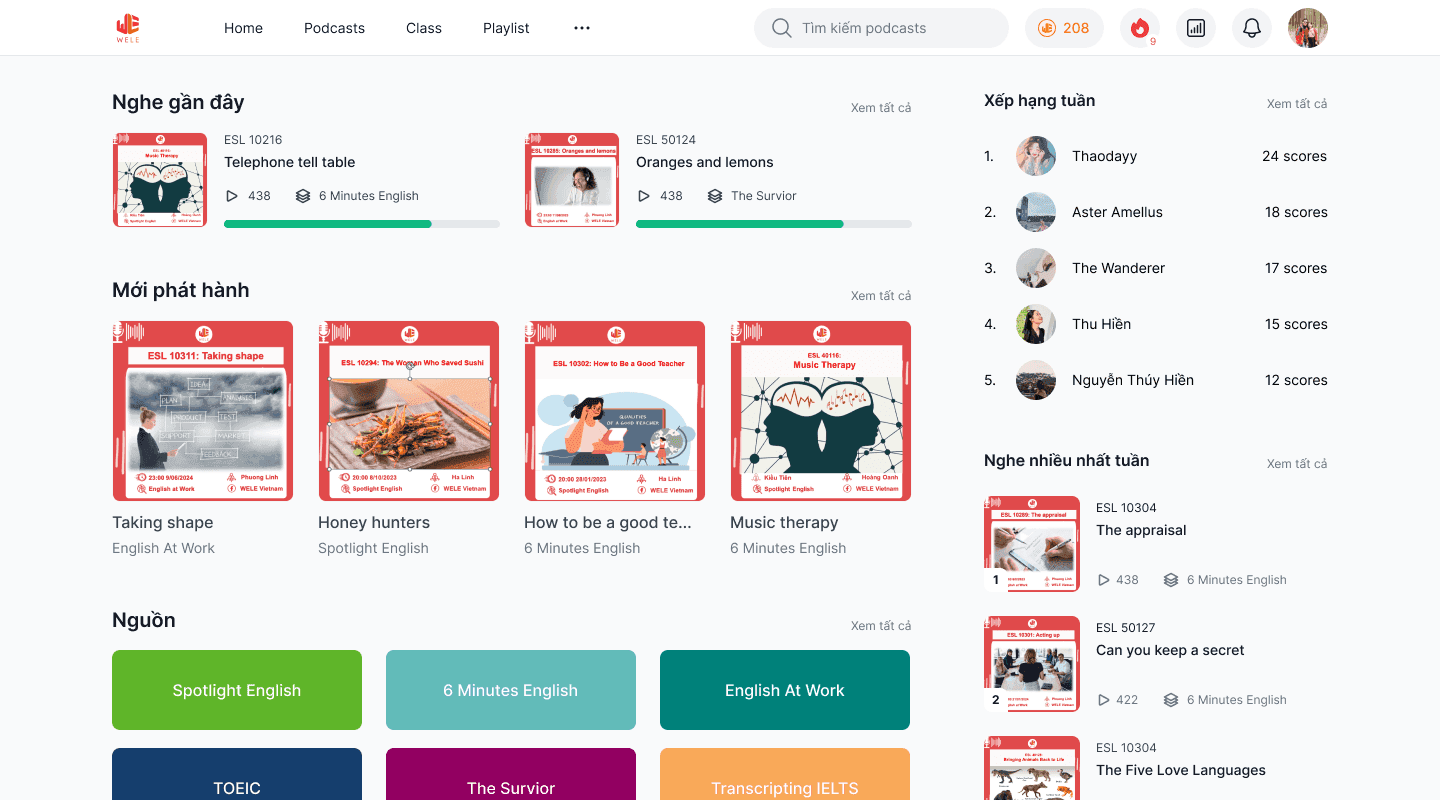
WELE's library is real podcasts — science, history, everyday life, technology — not scripted textbook dialogues. You hear native speakers talking at the speed they actually talk, so when you listen to podcasts or watch films on your own, your ear is already used to that pace.
Every episode comes with a full transcript and is sorted by difficulty, so you can pick one that fits your level instead of diving into something too hard and giving up halfway.
Practice for TOEIC and IELTS
In TOEIC and IELTS listening, most points are lost on small details: numbers, names, word endings, prepositions said in passing. Dictation forces you to deal with exactly those, because a missing word shows up the moment you check. Train on real content and the exam usually feels easier, since test audio is slower and clearer than everyday podcasts.
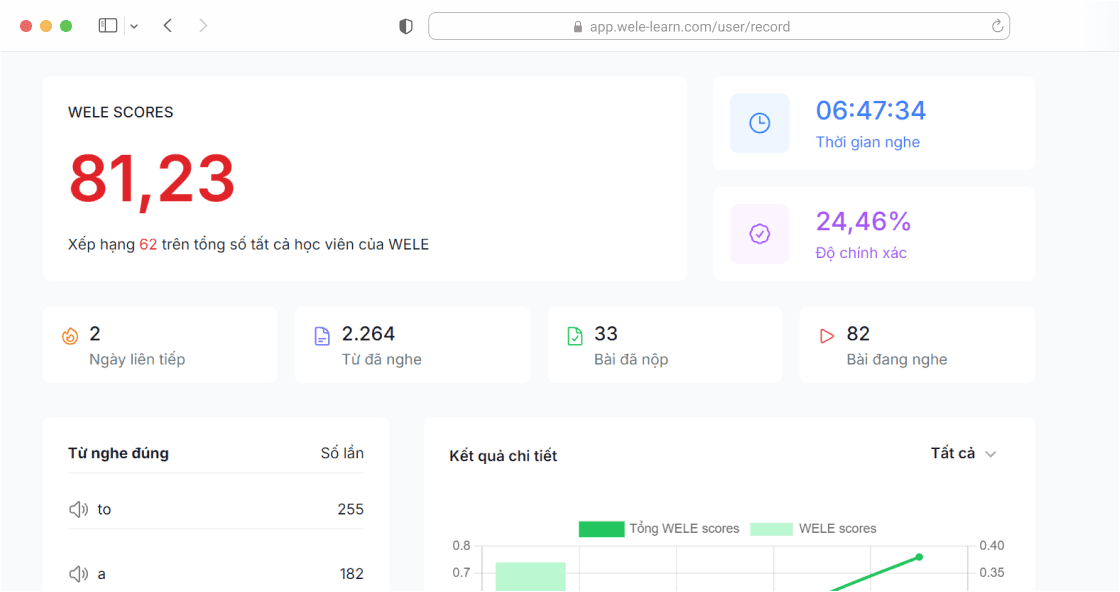
Your accuracy is recorded for every episode, so you can see whether you're improving or stalling — and which words keep turning up on your list of mishears.
Frequently asked questions
- What is English dictation practice?
- It's a way to train your listening by writing down exactly what you hear, then comparing it with the original transcript. Unlike listening and picking a multiple-choice answer, you can't guess — get one word wrong and you know right away you didn't catch it.
- How long should I practice dictation each day?
- One short episode a day, done consistently, beats a few hours at the weekend. Because you write out every sentence, it's fairly tiring mentally; keeping sessions short and regular makes the habit last longer.
- Is WELE free?
- Yes. Dictation and the graded results are free. Premium unlocks more content and some review tools, but the core listening practice costs nothing.
- Does dictation help with TOEIC or IELTS?
- Yes, indirectly. The tests check whether you can catch both the main idea and the details while listening, and dictation trains exactly the details — numbers, names, verb endings, function words said in passing. Those are also where people lose the most points.
- Can beginners do dictation?
- Yes, if the episode is easy enough. Start with short episodes where the speaker talks slowly and clearly. If you're not sure where to begin, take the listening level test first and follow its suggestions.
Dictation by topic
Pick a topic to see its episodes. Each one has a transcript to check against after you type.
 Beginner VietnameseSimple conversations and stories for absolute beginners1 episode
- Intermediate VietnameseNews, culture, and longer narratives for intermediate learners0 episodes
- Advanced VietnameseComplex topics, idioms, and literary Vietnamese0 episodes
- Vietnamese Tones PracticeFocused exercises on mastering Vietnamese tones0 episodes
- Business VietnameseProfessional vocabulary and workplace conversations0 episodes
- Vietnamese Slang & IdiomsColloquial expressions and idiomatic phrases0 episodes
TOEIC listening practice by PartBrowse the full dictation library
Try one episode right now
Pick a short episode, type it all out once, and see what you missed. It takes about ten minutes and you don't need an account.